Ambulette
Before an ambulette trip, account for every wheelchair accessory
Identify cushions, footrests, bags, and removable equipment so nothing is loose, forgotten, or mistaken for part of the chair.
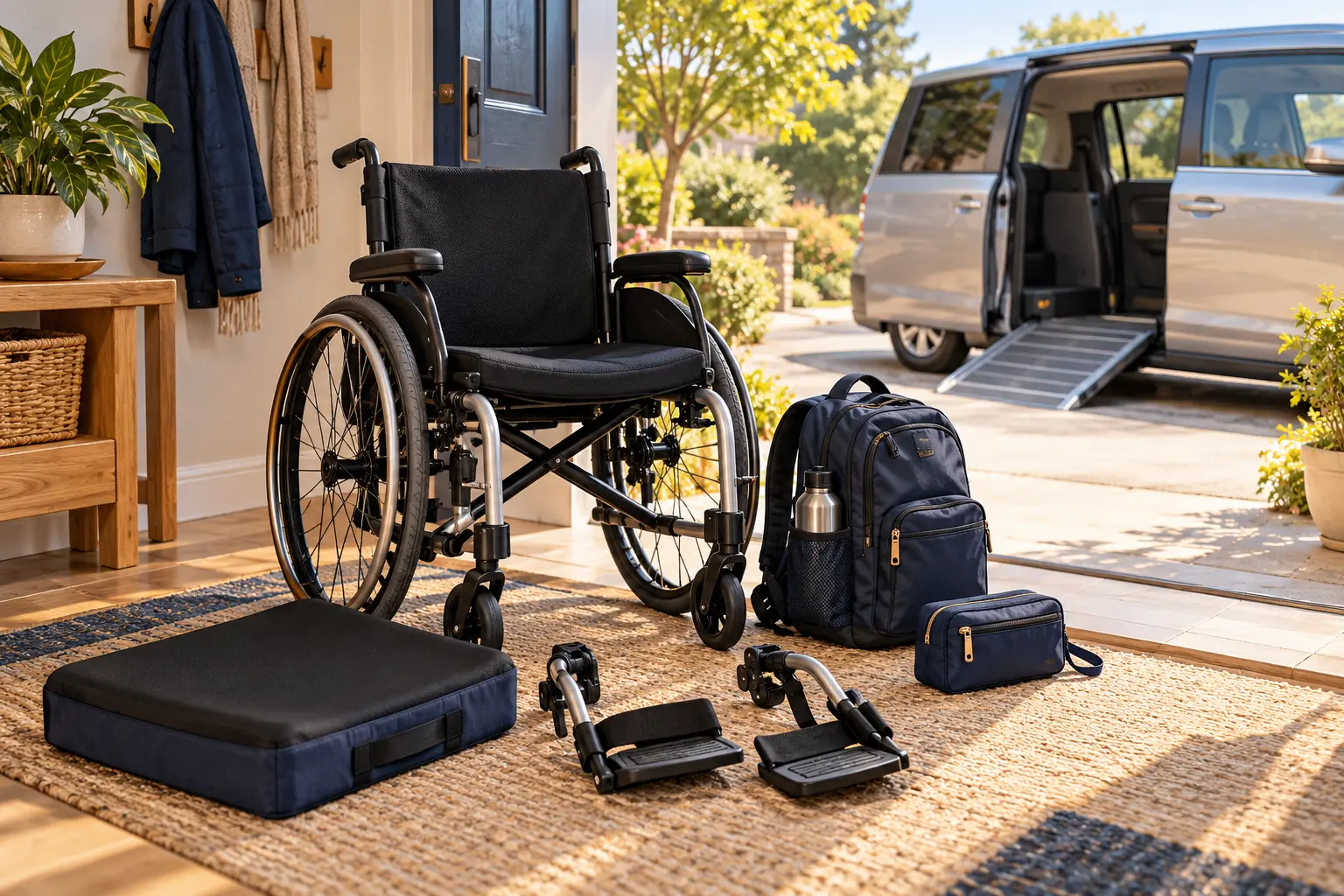
Original editorial illustration; not a photograph of Cathay operations.
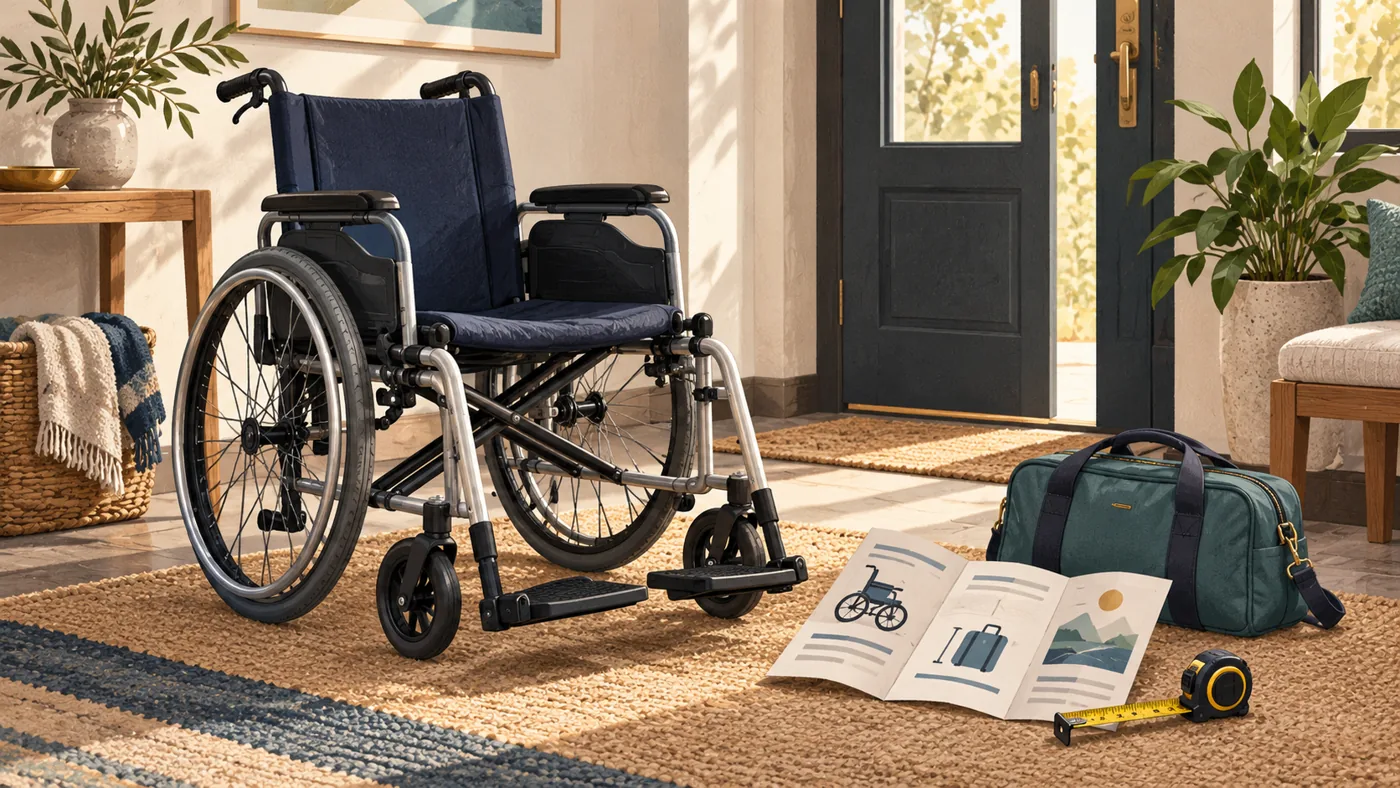
A wheelchair may travel with a cushion, footrests, side guards, a backpack, positioning supports, or other removable items. Those details matter when an ambulette trip is planned because an accessory can be left behind, interfere with movement, or need separate handling. The transportation office should understand what is traveling before the vehicle arrives.
List what belongs to the passenger
Before the trip, name the wheelchair type and each item that normally travels with it. Distinguish equipment that stays attached from items that can be removed. If a chair has recently been repaired or changed, update the provider rather than assuming the earlier description still applies.
Label personal belongings when practical, especially at a facility where similar cushions, bags, or footrests may be nearby. Keep medication, identification, and paperwork with the responsible passenger or caregiver rather than storing them loosely on the chair.
Ask before removing or rearranging equipment
Do not remove a positioning support, belt, cushion, or wheelchair component simply to make loading easier unless the passenger, caregiver, and transportation provider have confirmed the plan. Some items are part of how the person safely uses the chair.
Tell the booking office about bags, trays, oxygen equipment, or other added items in advance. The provider must determine what it can transport and how the trip should be arranged; a family should not improvise vehicle securement.
Complete a small departure check
Just before leaving, compare the chair with the accessory list. Make sure removable items intended for the appointment are present and that nothing is hanging near the wheels or dragging on the floor.
Facility staff should identify who will hand off the passenger and belongings. A clear handoff prevents one person from assuming another already placed an item with the chair.
- Cushion and positioning items.
- Footrests and removable supports.
- Bags or communication equipment.
- Items that must return with the passenger.
Repeat the inventory before the return
An accessory can be moved during an appointment or stored by clinic staff. Before the return vehicle is expected, gather the same items and check them against the list.
Report any equipment change to the transportation office before pickup. This article addresses trip logistics only; questions about how a wheelchair or positioning device should be used belong with the passenger's qualified clinical or equipment team.
Your next step
Plan a wheelchair transportation trip
Connect with our team to discuss your needs and the available arrangements.