
Ambulette
Planning wheelchair transportation for an overnight family visit
Coordinate the outward ride, overnight belongings, destination access, and the return booking before a visit begins.
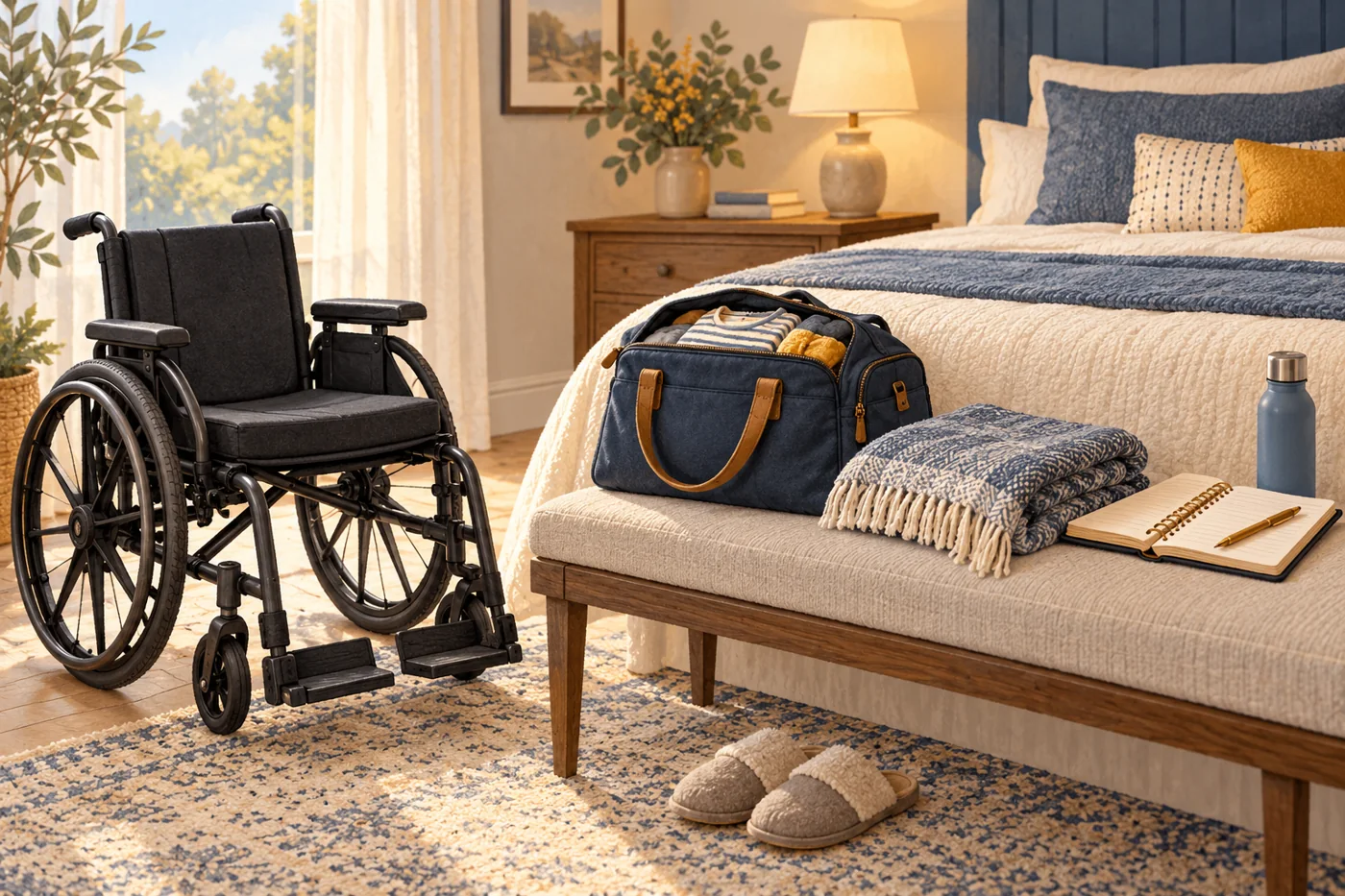
Original editorial illustration; not a photograph of Cathay operations.
An overnight visit involves more than adding a suitcase to an ordinary wheelchair trip. The passenger may need belongings, equipment, and support at a home they do not use every day. A clear plan separates what the transport provider has agreed to carry from what the host will have ready. Confirm the arrangement for both directions rather than assuming the return will simply reverse the outward journey.
Start with the passenger's usual routine
Ask the passenger what they want to take, who will help them during the visit, and which parts of the journey need discussion with the provider. Record the wheelchair type and any relevant changes from the last booking. Do not rely on a family member's description of an earlier chair if the passenger now uses different equipment.
Keep care decisions with the passenger and their care team. An ambulette booking is not a substitute for arranging support at the destination. If the visit depends on equipment or assistance being available overnight, verify that separately before confirming travel.
Describe the actual load
Count bags and describe larger items before booking. A small overnight bag, a folded extra chair, and a boxed piece of equipment have different space requirements. Ask the provider what can be accommodated and how belongings should be prepared; do not assume that unused passenger seats are luggage space.
Make a short packing list that distinguishes essentials needed during travel from items that can remain closed until arrival. For powered mobility equipment, bring manufacturer information if it helps explain the device, and follow the manufacturer's own instructions rather than improvising transport or charging arrangements.
- Wheelchair or mobility-device details supplied to the provider.
- Number and approximate size of bags.
- Named person responsible for belongings at each end.
- Any additional equipment explicitly discussed before travel.
Ask the host to check the arrival details
Give the host the expected arrival arrangement and the agreed entrance. Ask them to verify that the intended entrance is available that day and that someone can meet the passenger as planned. A building's familiar address does not establish which entrance the transport team should use.
Discuss any uncertainty about steps, doors, lifts, or the path through the building with the provider ahead of time. Do not treat a host's general assurance that a home is accessible as confirmation of a particular transport arrangement. Resolve the practical details before the vehicle arrives.
Book the return as its own journey
Confirm the return date, collection location, passenger contact, and who will be present. Include any belongings or equipment that will travel back but were not carried outward. Keep the booking confirmation accessible to both the passenger and the person coordinating the visit.
Before departure from the host's home, compare the packing list with what is ready to leave. Check chargers, cases, and small accessories that may have been unpacked. If plans change, contact the booking office and obtain a revised confirmation rather than passing the change only to the outward driver.
Your next step
Discuss an overnight visit and wheelchair travel arrangements
Connect with our team to discuss your needs and the available arrangements.